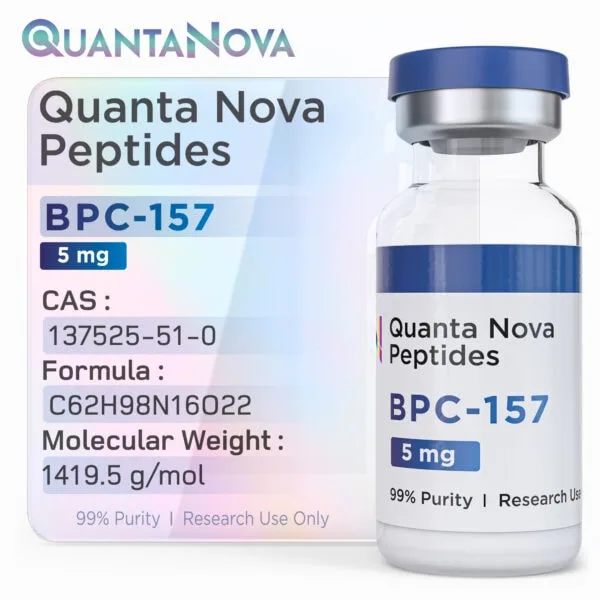
Researchers have explored BPC-157 in studies involving: Cellular signaling pathways Molecular biology research Cytoskeletal organization Nitric oxide pathway signaling Extracellular matrix regulation Growth-factor communication networks Gastrointestinal biology models Tissue biology investigations Peptide stability investigations Rather than binding to a single isolated receptor, preclinical literature indicates that BPC-157 influences a cascade of molecular communication networks: VEGFR2 Activation and Angiogenesis: In vitro models demonstrate that BPC-157 upregulates the expression of Vascular Endothelial Growth Factor A (VEGF-A) and triggers the phosphorylation of Vascular Endothelial Growth Factor Receptor 2 (VEGFR2) (Hsieh et al., 2017)
It is derived from a naturally occurring protein found in the stomach known as BPC
It's the same 15-amino-acid peptide chain, but instead of being stabilized with an acetate salt, it's bonded to an L-Arginine salt
Not FDA-approved for any human use
Also in some instances, the medium chain triglyceride as shown in below tables is replaced with a mixture of mixture of long-chain triglyceride and medium-chain triglycerides (0.1:99.9 to 99.9:0.1), The formulation is prepared by dissolving the appropriate amount of a JNK inhibitor and one or more than one of the viscosity modulating agents, such as PVP, carbomer, and P407, in water for injection and sterile filtering the solution